Visual analytics
Three views over one scene axis — structure lanes, character lanes, setup arcs; every lane carries a code-computed conclusion, and charts never touch your draft.
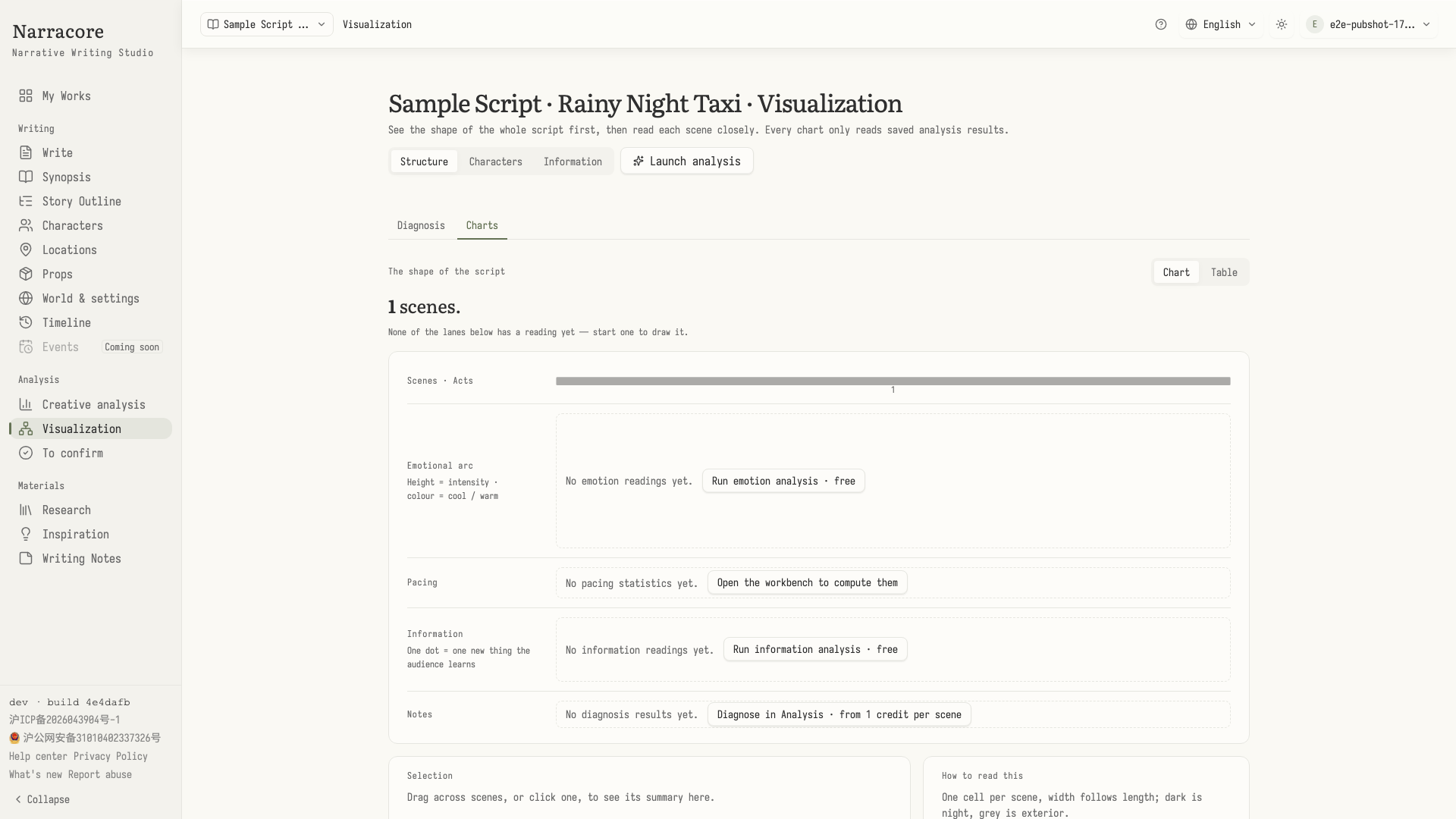
Numbers and shapes read the whole script for you — the structure / character / information views share one scene axis:
Structure view
Four reading lanes — the emotion arc (height = intensity, warm/cool = direction), the pacing barcode, information dots, problem dots — with a code-computed conclusion line beside each; drag a range for a four-line summary, click a scene for the evidence drawer. Disagree with an emotion reading? Calibrate it — recomputation never overwrites you.
Character view
Presence lanes (consecutive absences in red dashed frames) + a focus card (arc start/end, turns, knowledge, relations) + the relationship graph (base free, physics layout per view).
Information view
Setup arcs (unrecovered setups are broken arcs), the knowledge matrix (the audience knowing first = dramatic irony), the narrative-technique band; the "this scene" and "information threads" cards carry the cross-scene advisories.
Two disciplines
Visualization is read-only — evidence jumps back to the script, edits happen in the editor; unanalyzed lanes say "launch (N credits)" right where they belong, gaps stay gaps, and zero data never fakes a shape.