AI analysis
Read the whole-script verdict first, drill into scenes to fix them second — setups, character arcs, a four-dimension verdict; every claim points back to your text, and the pen stays in your hand.
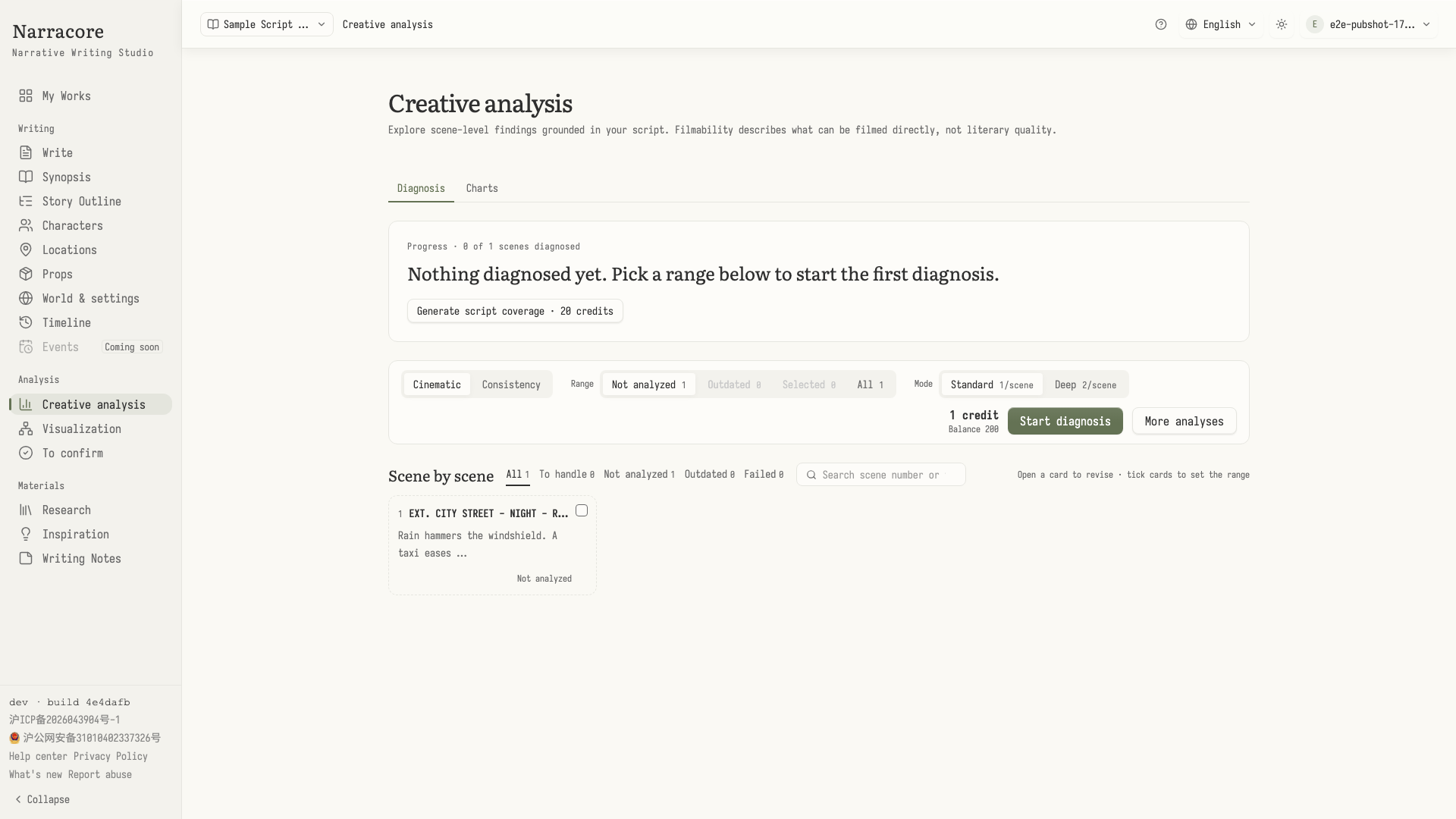
Hand your finished draft to AI for a checkup: what opens first is the whole-script verdict — a logline, four dimensions (structure / character / information / scene writing), and a priority list. Below it, a card per scene; click a problem to enter the revision desk — the flagged sentences underlined in your own text, suggestions side by side, see clearly before you act.
What it checks
- Scene diagnosis: quick (1 credit/scene) or pro (2 credits/scene) — summary, highlights, problems, rewrite suggestions, evidence jumping back to the sentence;
- Whole-script verdict (20 credits/run): four dimensions + priority fixes — no scores, no stars;
- Setups and payoffs (10 credits/run): what was planted, what landed — count the broken arcs at a glance;
- Character arcs (10 credits/run): where each major character starts, turns, and ends — appearances counted by code, never by the AI;
- Emotion, information density, narrative techniques, perspective and information gaps, consistency — each with its own dedicated report.
Three disciplines
- AI never edits your text directly — every write goes through you;
- Your rulings (update settings / not now / wrong direction) are remembered and never re-asked;
- Failures refund automatically; reports export as Markdown.